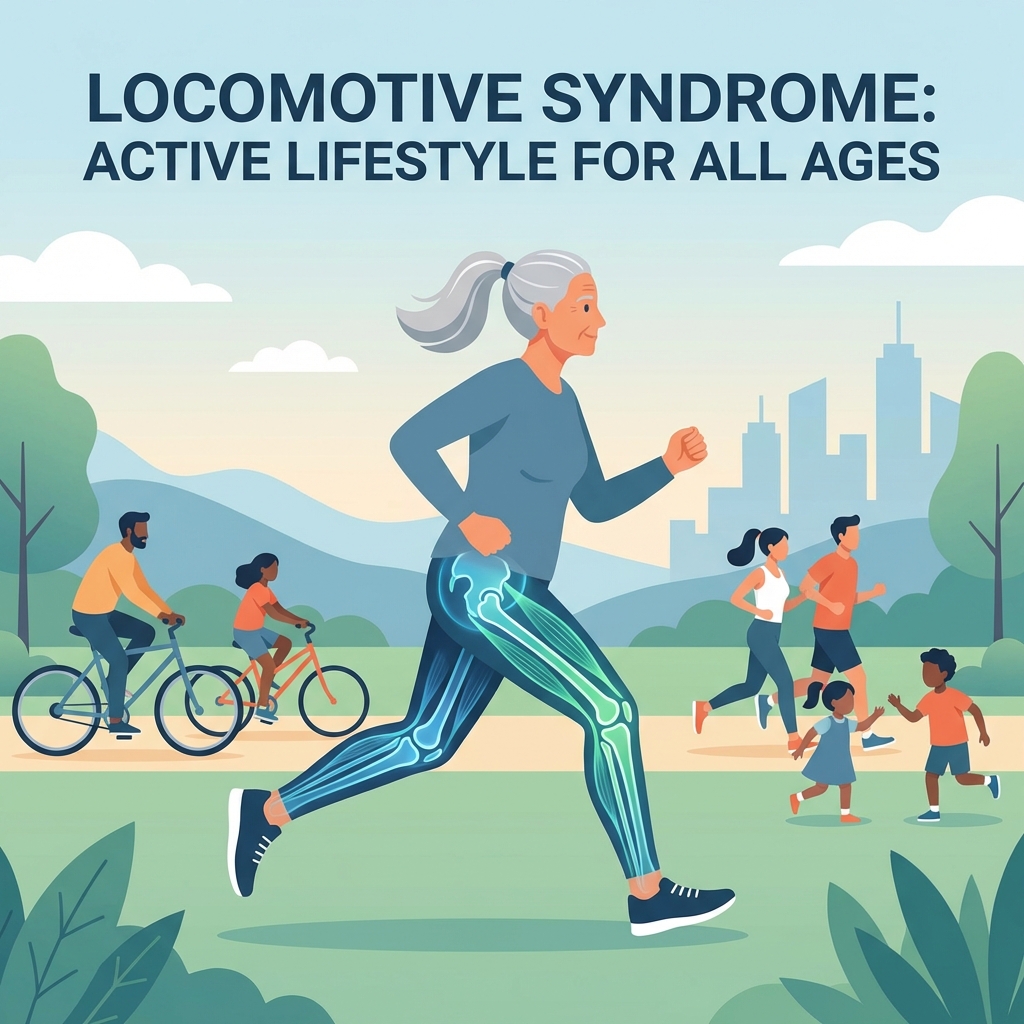
Have you heard of the term "Locomotive Syndrome" (commonly known as "Locomo")?
This refers to a condition where the functions of "locomotive organs" such as muscles, bones, and
joints decline with age, leading to reduced mobility functions such as standing and walking. If it
progresses, the risk of requiring nursing care or becoming bedridden in the future increases.
If you thought, "That's just for elderly people, right?" you need to be careful. Due to lack of exercise caused by modern convenient lifestyles, it is said that the number of "Locomo reserves" is increasing even among people in their 40s, 50s, and younger generations.
Are You Safe? "Loco-Check"
First, let's check the following 7 items. If even one applies to you, there is a concern for Locomo.
- You cannot put on socks while standing on one leg.
- You stumble or slip inside your house.
- You need a handrail to go up stairs.
- You find it difficult to do moderately heavy housework (like vacuuming or lifting futons).
- You find it difficult to carry home about 2kg of shopping (about two 1-liter milk cartons).
- You cannot walk continuously for about 15 minutes.
- You cannot cross a pedestrian crossing before the light turns red.
Action Plan Starting Today: "Locotra"
Locomo can be prevented and improved with appropriate exercise and diet. Here, we introduce two representative exercises from the "Locomotion Training (Locotra)" recommended by the Japanese Orthopaedic Association.
1. Squats (Strengthen Lower Body)
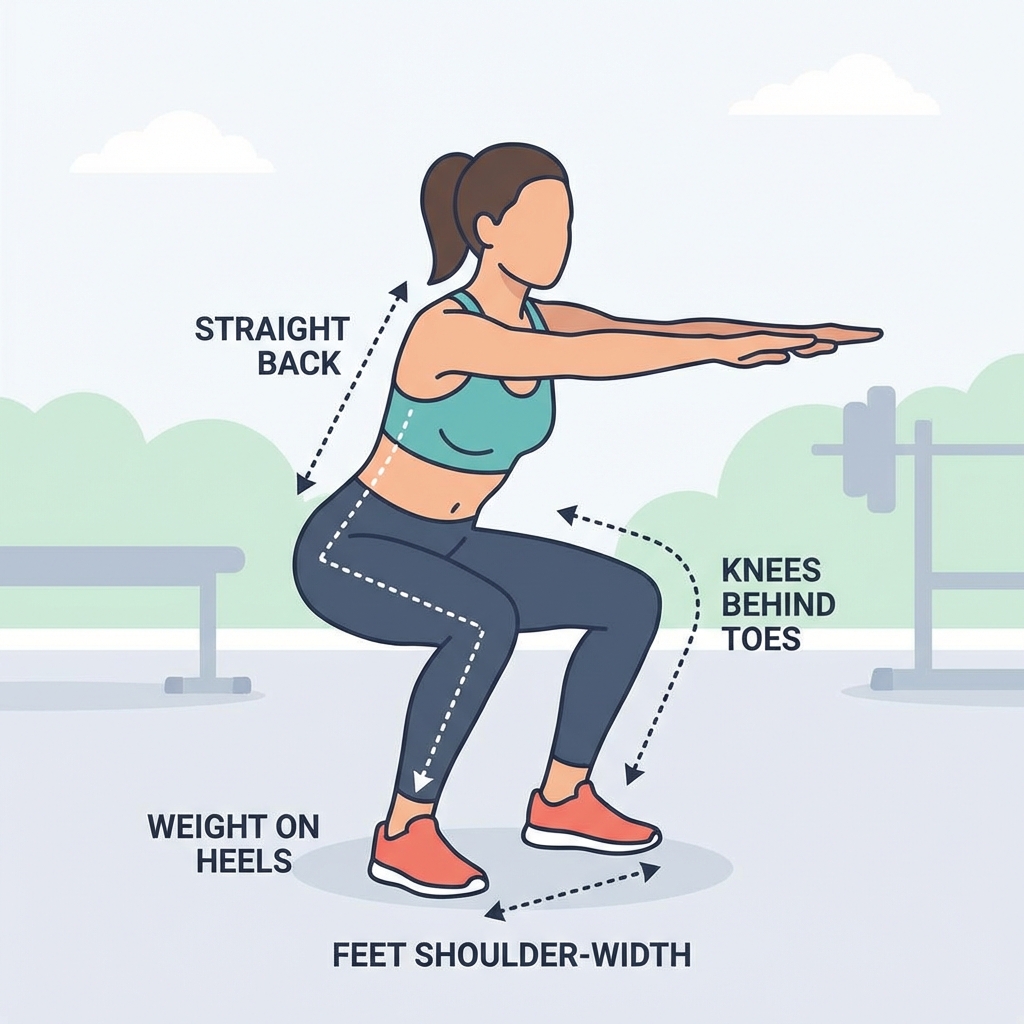
Comprehensively strengthens the lower body muscles necessary for movements such as walking, standing, and sitting.
- Stand with your feet slightly wider than shoulder-width apart. Point your toes slightly outward.
- Slowly bend your knees as if pulling your buttocks backward.
*Be careful not to let your knees go past your toes. - Slowly return to the original position while feeling the strength in your thighs.
2. One-Leg Standing (Improve Balance)
Stand on one leg for 1 minute on each side. To prevent falling, be sure to do this near a desk or wall where you can hold on.
Although this exercise looks plain compared to dynamic exercises, it is actually highly effective for putting load on bones to strengthen them and for cultivating a sense of balance to prevent falls.
Diet is Important Too: Intake Materials for Bones and Muscles
Along with exercise, diet is also crucial.
- Protein: Material for muscles (Meat, fish, eggs, soy products, etc.)
- Calcium: Material for bones (Dairy products, small fish, green and yellow vegetables, etc.)
- Vitamin D: Helps absorption of calcium and supports muscle synthesis (Salmon, mushrooms, etc. Also generated by sunbathing)
"Walking on your own feet for a lifetime." It's never too early to start building a body for that. Why not start with daily squats?